PLATO
PREVIOUS EXHIBITION
Vadim Pugin
The Walled Garden
June 4 - July 11, 2026
PLATO is excited to announce the opening of Vadim Pugin’s solo exhibition at PLATO, The Walled Garden, on Thursday, June 4, from 6–8 pm. The show will be on view through July 11.
In The Walled Garden, New York–based artist Vadim Pugin presents a new body of work exploring the contours of subjectivity in an era shaped by commodified attention and engineered desire.
The exhibition brings together ceramics, sound, video, and fabric installation within an environment the artist describes as Cyber Baroque: a logic of excess in which surveillance has learned to disguise itself as seduction. Ceramic mascarons — architectural masks historically embedded in Baroque facades — establish the exhibition’s spatial order, functioning as autonomous agents that guide the viewers’ movement while simultaneously returning their gaze.
The exhibition’s title, The Walled Garden, is borrowed from advertising technology — the industry in which Pugin worked for nearly two decades. The term describes a closed digital ecosystem where user data is collected, contained, analyzed, and monetized. Drawing on the artist’s firsthand experience with targeting infrastructures, bidding markets, and behavioral modeling, the exhibition aims to reveal the systems that make platforms feel as though they have read your mind. That uncanny precision becomes an inverted panopticon: a structure extending across urban and personal space, endlessly hungry for data.
In creating The Walled Garden, Pugin turned to the allegory of the historical Baroque garden, which was never truly a sanctuary, but a machine for observation. Its rigid geometries, forced perspectives, and unnatural symmetries offered no retreat to those who wandered through it. From the highest palace window, the sovereign watched. Similarly, Pugin reconstructs the architecture of control embedded within online platforms: the curated feed as endless folds of illusory abundance, the recommendation engine as a maze of garden paths, and the algorithm as a sovereign force that has already determined the direction of our movement.
Several ceramic works embody these mechanisms. Engagement is one such piece: glazed in reptilian green, with a network of spikes surrounding a striking trefoil centered around a small circle, it resembles an overgrown biohazard sign. The algorithm does not reward what is truthful; it rewards what is reactive. Social media feeds are an echo chamber where the loudest impact is amplified and placed in the center. This Engagement creature was bred in and thrives within that kind of toxic environment.
Another ceramic, Attachment, is adorned with a glowing red lens that quietly watches the viewers as they move through the space. The digital red dot — the “unread” count in the corner of an application icon — is not merely a signal, but a lure, refined across billions of interactions until it bypasses deliberation entirely and reaches directly into the nervous system. The notification is any platform’s most domesticated visual cue and its most predatory. Here, it blooms into an ominous plant: armored, deep-sea-like, curled protectively around the glowing eye it uses to find you.
For Pugin, ceramics function as a high-technology medium with its own agency. His approach to it mimics his experience in music production: forms are constructed through additive and subtractive gestures analogous to sound synthesis; glazed surfaces, fired at 2,200°F, emerge through chemical processes in which rare-earth elements and metals fuse and crystallize into outcomes the artist can guide but never fully control. Once fired, ceramic carries the potential to outlast its viewer. A material directed but never completely commanded, a duration that exceeds the human — the medium itself rehearses the conditions of the systems the exhibition seeks to expose.
What grows inside this garden is no longer fully legible even to its gardeners. AI cannot be understood simply as something engineered; what is built instead is the infrastructure and the environment in which it takes root, growing with a speed and invasiveness that even its architects cannot predict. Increasingly, even developers enter a state where it is no longer clear who is curating whom.
And if those who built the walls are losing that clarity, what of those who merely tend their own digital spaces — pausing, scrolling, lingering, desiring? Are they cultivating a garden, or simply serving as its fertilizer?
The exhibition does not answer this question so much as transform its terms. Pugin refuses both the fantasy of escape and the comfort of resignation. The central operation of Cyber Baroque is to render the garden's hidden agents visible — targeting systems and surfaces that watch back — so they may be understood as infrastructure rather than fate. Pugin’s wager is that political imagination cannot remain the privilege of those who design the walls. It must instead become the practice of those who inhabit them so they can learn to move through the garden on their own terms.
Vadim Pugin (b. 1986, Moscow, Russia) is a New York–based multidisciplinary artist working across ceramics, video, and sound. His sculptures and installations combine handmade materials with computational systems to create objects that appear to sense, gaze back at and respond to the viewer. Moving between the tangible and the digital, Pugin investigates how contemporary perception is shaped by platforms, surveillance, feedback loops, and algorithmic systems of control.
Vadim Pugin holds a Master’s degree from the Russian State University for the Humanities. He studied contemporary art through the Learning Environment program in Moscow, where he worked in the studios of Dmitry Morozov (::vtol::), Alexander Povzner, and Arseny Zhilyaev. Pugin’s recent exhibitions include Exaltation, PLATO, New York, NY (2025); The New Uncanny at The New Uncanny Gallery, New York, NY (2025); IX Moscow International Biennale of Contemporary Art, the State Tretyakov Gallery, Moscow, Russia, and Everything Counts, Ground Solyanka, Moscow, Russia (2022). Pugin was the winner of the Vyksa Festival Open Competition for Urban Sculpture as part of Resitor Group in 2023.
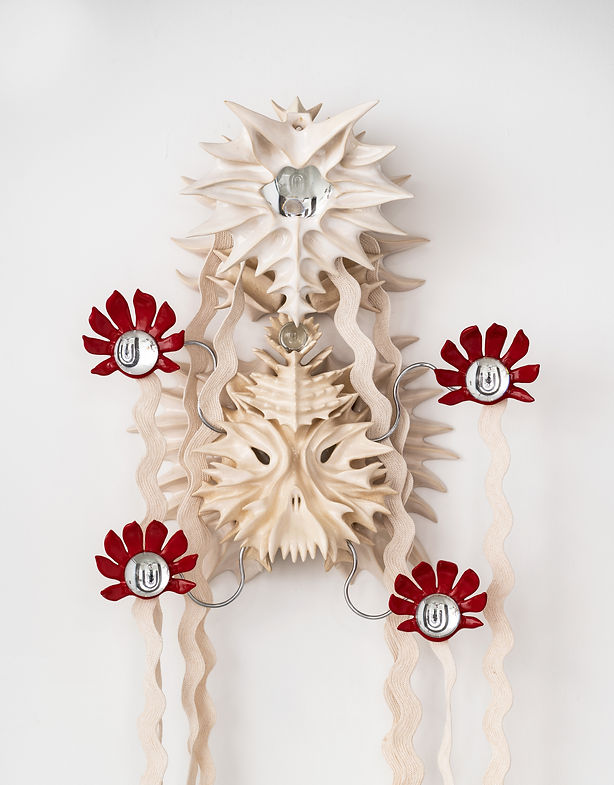
Vadim Pugin
The Gatekeeper, 2026
Glazed stoneware, glass, mirror, cotton
29 x 24 x 6 in.
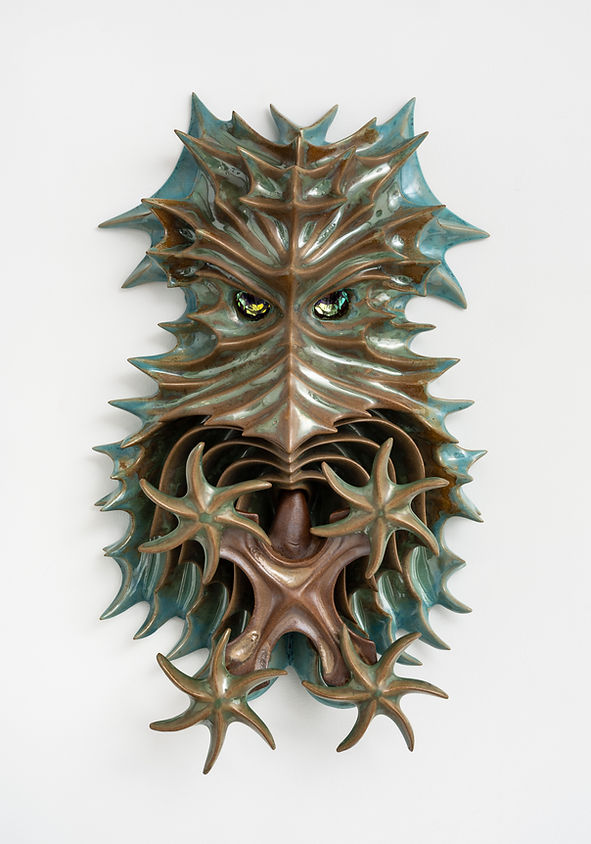
Vadim Pugin
Watch Bird, 2026
Glazed stoneware, glass
29 x 15.5 x 6 in.
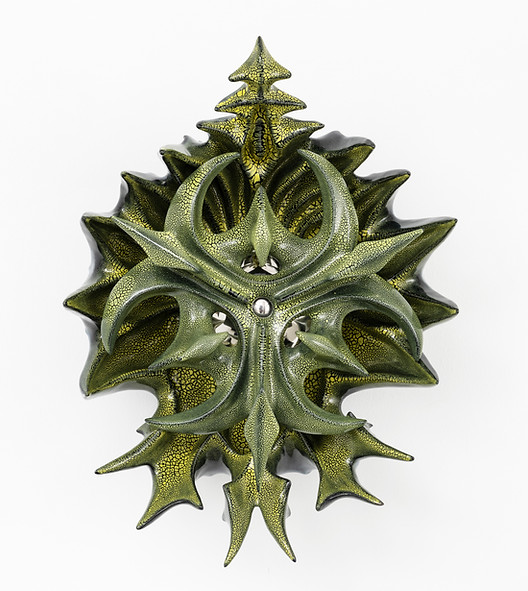
Vadim Pugin
Engagement, 2026
Glazed ceramic, steel
24 x 15 x 11 in.
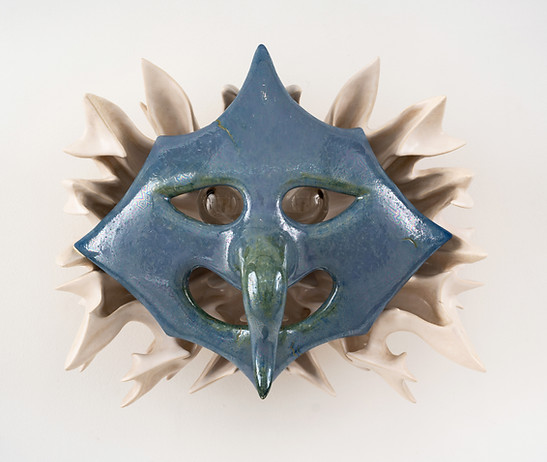
Vadim Pugin
Supreme Misleader, 2026
Glazed ceramic, glass
16 x 14 x 9.5 in.
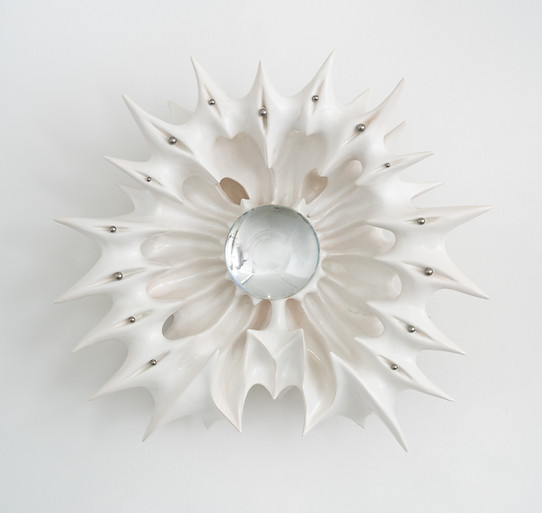
Vadim Pugin
Profiling, 2026
Glazed ceramic, glass, mirror, steel
17 x 15 x 7 in.
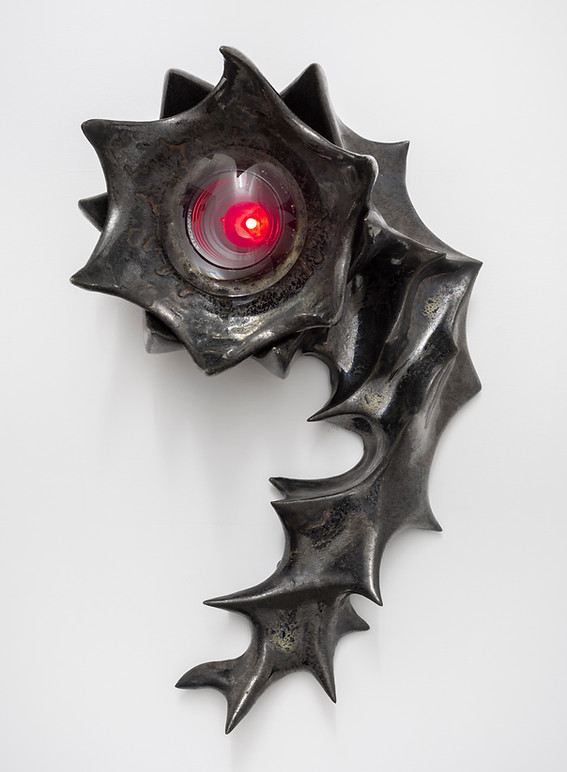
Vadim Pugin
Attachment, 2025
Glazed stoneware, lenses, aluminum, LED, battery
22 x 13 x 6.5 in.
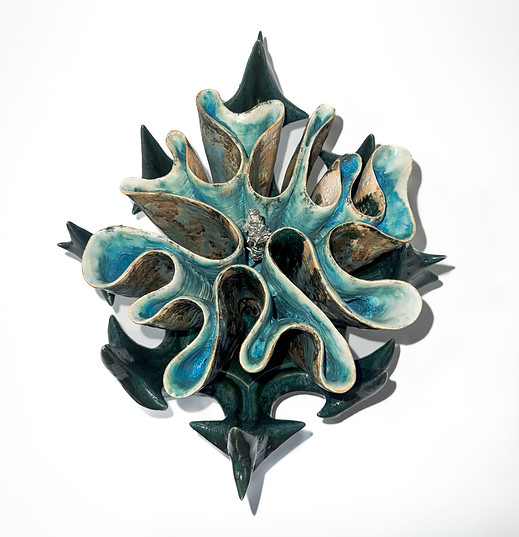
Vadim Pugin
Fold, 2025
Glazed 3D-printed ceramic, hand-built stoneware, tin
13 x 11 x 12 in.

Vadim Pugin
Act 1: Emulation, 2026
Painted polymer, glass, acrylic mirror, glazed ceramic
11 x 11 x 11 in.
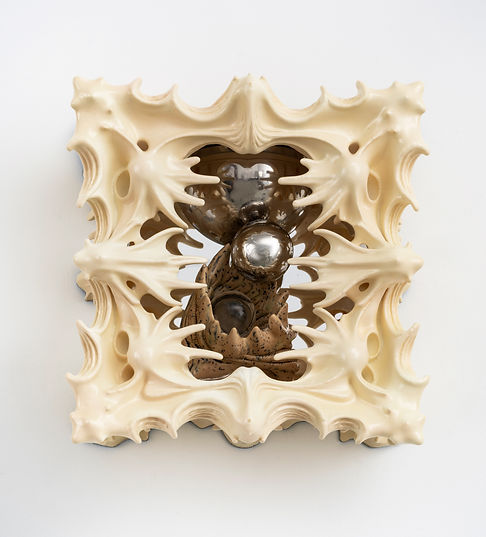
Vadim Pugin
Act 2: Sublimation, 2026
Painted polymer, glass, acrylic mirror, glazed ceramic
11 x 11 x 11 in.
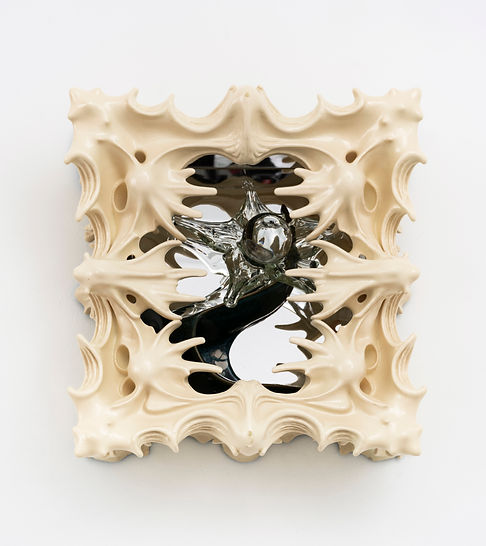
Vadim Pugin
Act 3: Subversion, 2026
Painted polymer, glass, acrylic mirror, glazed ceramic
11 x 11 x 11 in.
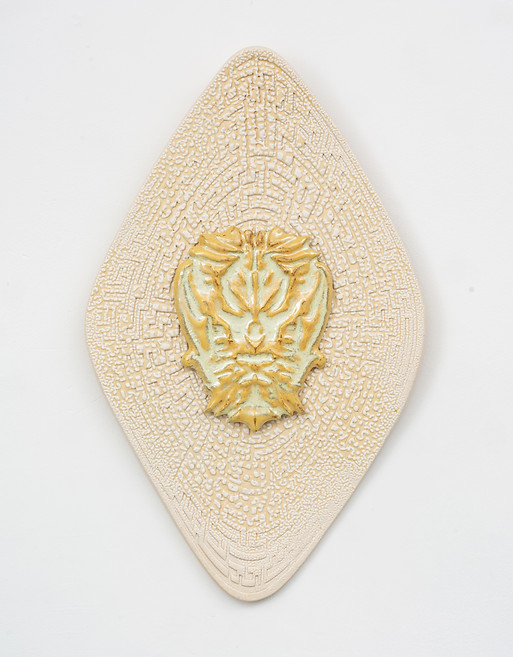
Vadim Pugin
Vera Effigies, 2026
Glazed ceramic
15.5 x 10 x 1 in.
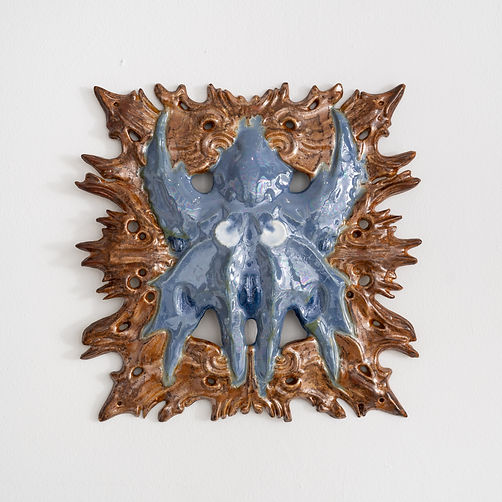
Vadim Pugin
Chimera, 2026
Glazed porcelain
11.5 x 11.5 x 0.5 in.
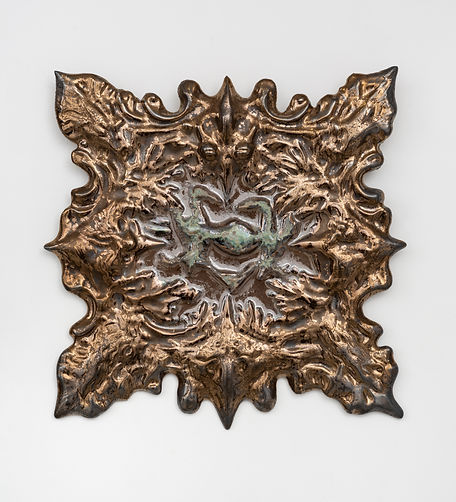
Vadim Pugin
Match, 2026
Glazed stoneware
11 x 11 x 0.5 in.
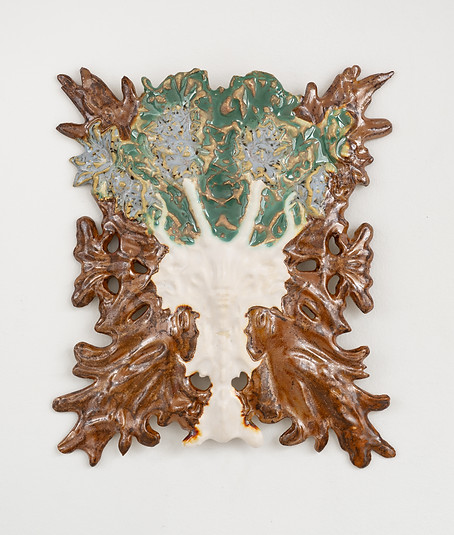
Vadim Pugin
Kepos, 2026
Glazed porcelain
10 x 8.5 x 0.5 in.
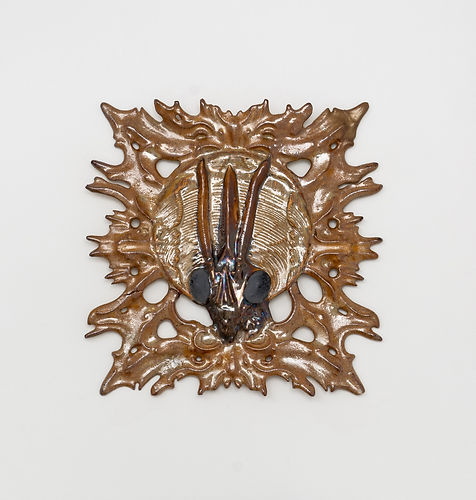
Vadim Pugin
Headhunter I, 2026
Glazed porcelain
8.5 x 8.5 x 0.5 in.
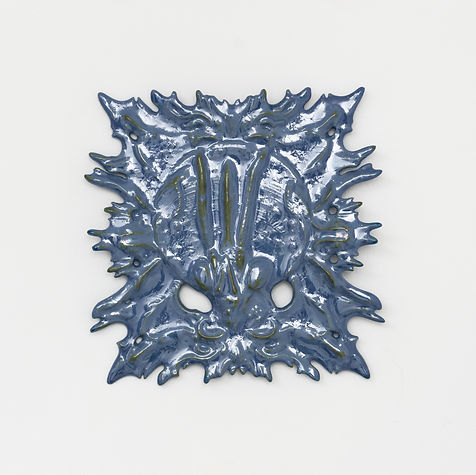
Vadim Pugin
Headhunter II, 2026
Glazed porcelain
8.5 x 8.5 x 0.5 in.
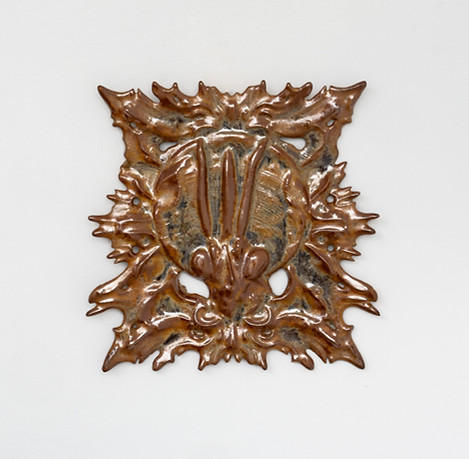
Vadim Pugin
Headhunter III, 2026
Glazed porcelain
8.5 x 8.5 x 0.5 in.
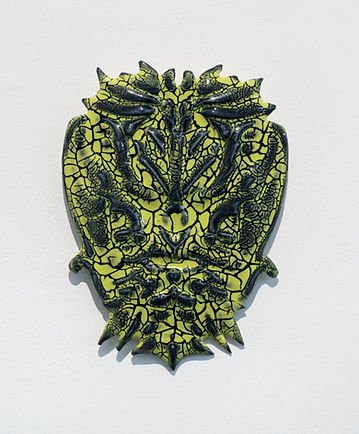
Vadim Pugin
Unmasked, 2026
Glazed ceramics
5.5 x 4.5 x 0.5 in.

Vadim Pugin
The Pan, 2025
Glazed stoneware, computer, four screens, sound system, steel, acrylic and wood
73 x 84 x 47 in.